


Every reporting cycle, the same pattern: chase portfolio companies for updates, hunt for the latest valuations, rebuild the same Excel schedules, and hope no number changed after the deck went out. Meanwhile an LP calls with an ad hoc question, and the answer requires three people and two days.
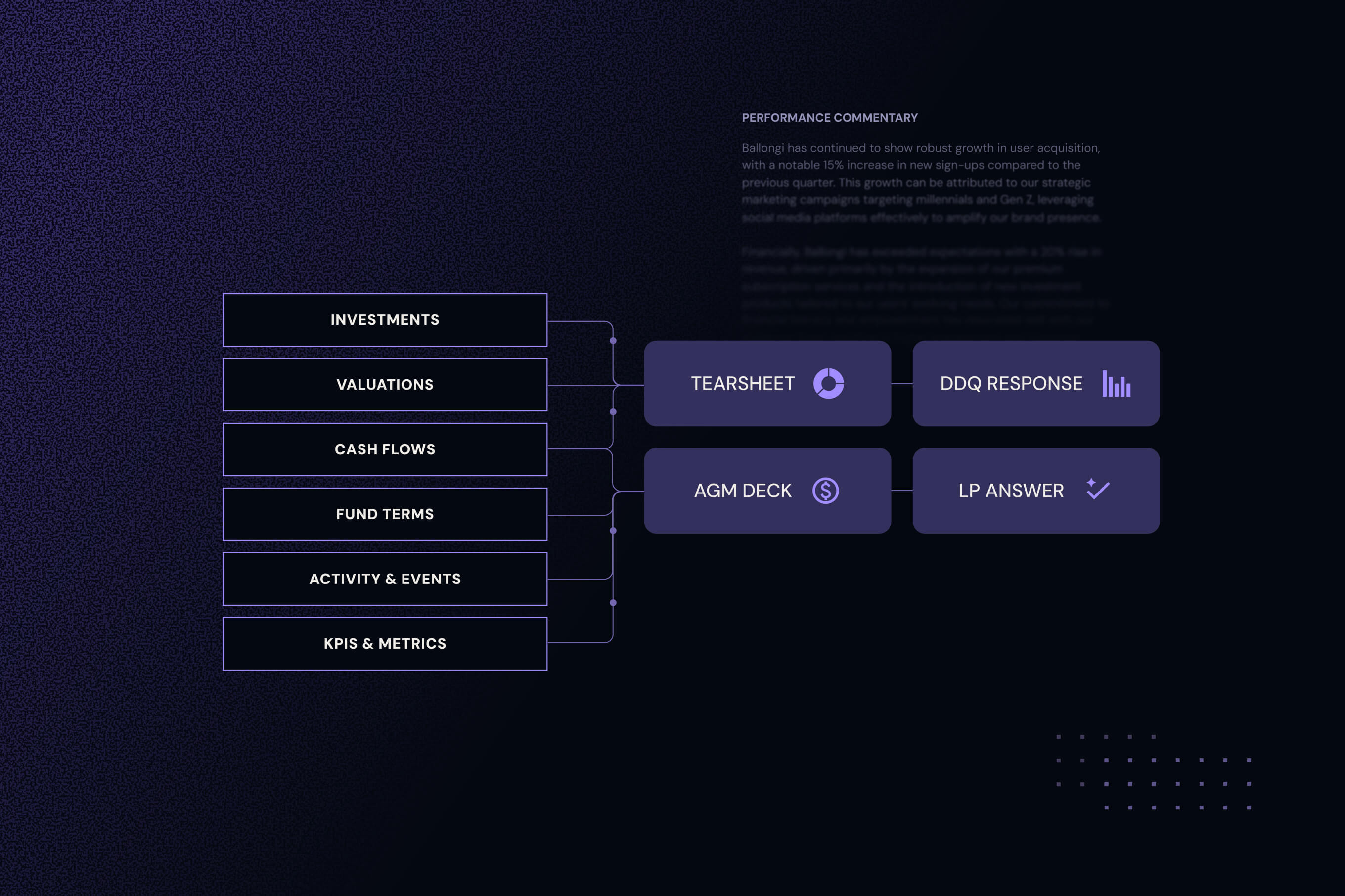
financing history, ownership, KPIs, and commentary for any portfolio company, current as of today
diligence questionnaires answered from a golden source of truth instead of rebuilt from scratch each raise
fund and portfolio performance pulled together for LP meetings, from reconciled data
performance, marks, and movement across the portfolio, with lineage to source documents — plus any internal cut your team wants
any question about a company, fund, or the whole portfolio, answered in seconds via Foresight AI
Quarterly LP reporting — capital account statements and the formal reporting package — is typically produced by your fund administrator. Foresight is the layer underneath: reconciled fund accounting, verified cap tables, and expert-checked KPIs that feed those reports, so the numbers your administrator sends and the numbers your team sees agree. For everything else — AGM decks, DDQs, internal reviews, and ad hoc LP questions — Foresight produces it directly.
Every figure traces back to reconciled sources — fund accounting, verified cap tables, extracted deal documents, and expert-checked KPIs. When an LP asks where a number came from, the answer is in the platform, not in someone's memory. Confidence is not a dashboard; it's knowing where the number came from.
Because fund metrics (TVPI, DPI, Net IRR) calculate in real time from integrated data, reporting stops being an event. When a transaction closes, it's reflected immediately — as Greycroft's finance team describes it, a partner can see yesterday's closed investment today, without anyone updating a spreadsheet.